
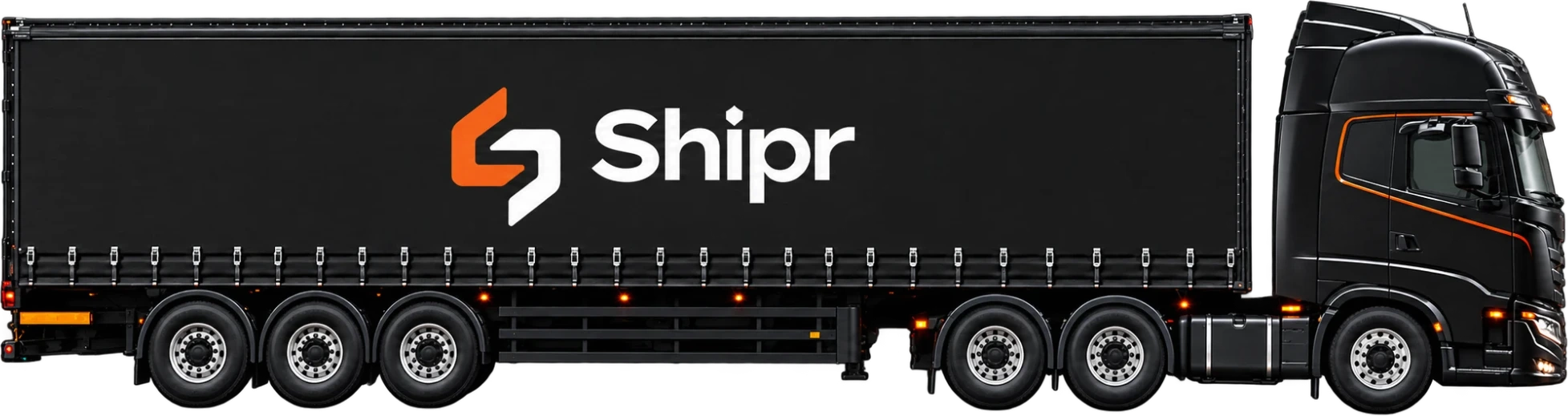
الخدمات اللوجستية. مبسّطة.
Logistics. Simplified.
Dispatch a truck in a few clicks. Prove what happened with evidence from the cab. Turn that evidence into an invoice nobody can argue with. Built for road freight in the Kingdom.
Powered by IoT Cube
Logistics runs on a whiteboard, a spreadsheet and a WhatsApp group
A typical mid sized haulier runs dispatch on a whiteboard, the fleet in a spreadsheet, drivers in a chat group, documents in a folder of scans, and an accounting package that learns about a trip weeks after it happened. Four consequences follow.
- 01
- No single record of a movement
- Nobody can answer where a load is and why it is late without three phone calls.
- 02
- Lateness cannot be attributed
- The customer is charged for waiting they caused, or the carrier absorbs it. Both end in dispute.
- 03
- Compliance lives in a drawer
- A truck is dispatched on an expired istimara and stopped at a checkpoint.
- 04
- Billing lags execution
- Revenue is invoiced late, and waiting and detention are never billed at all.
Your operation stops being four systems
The booking, the truck that moved it, the proof it arrived and the invoice you raise for it are one record — not a whiteboard, a spreadsheet, a chat group, and an accounting package that finds out weeks later.
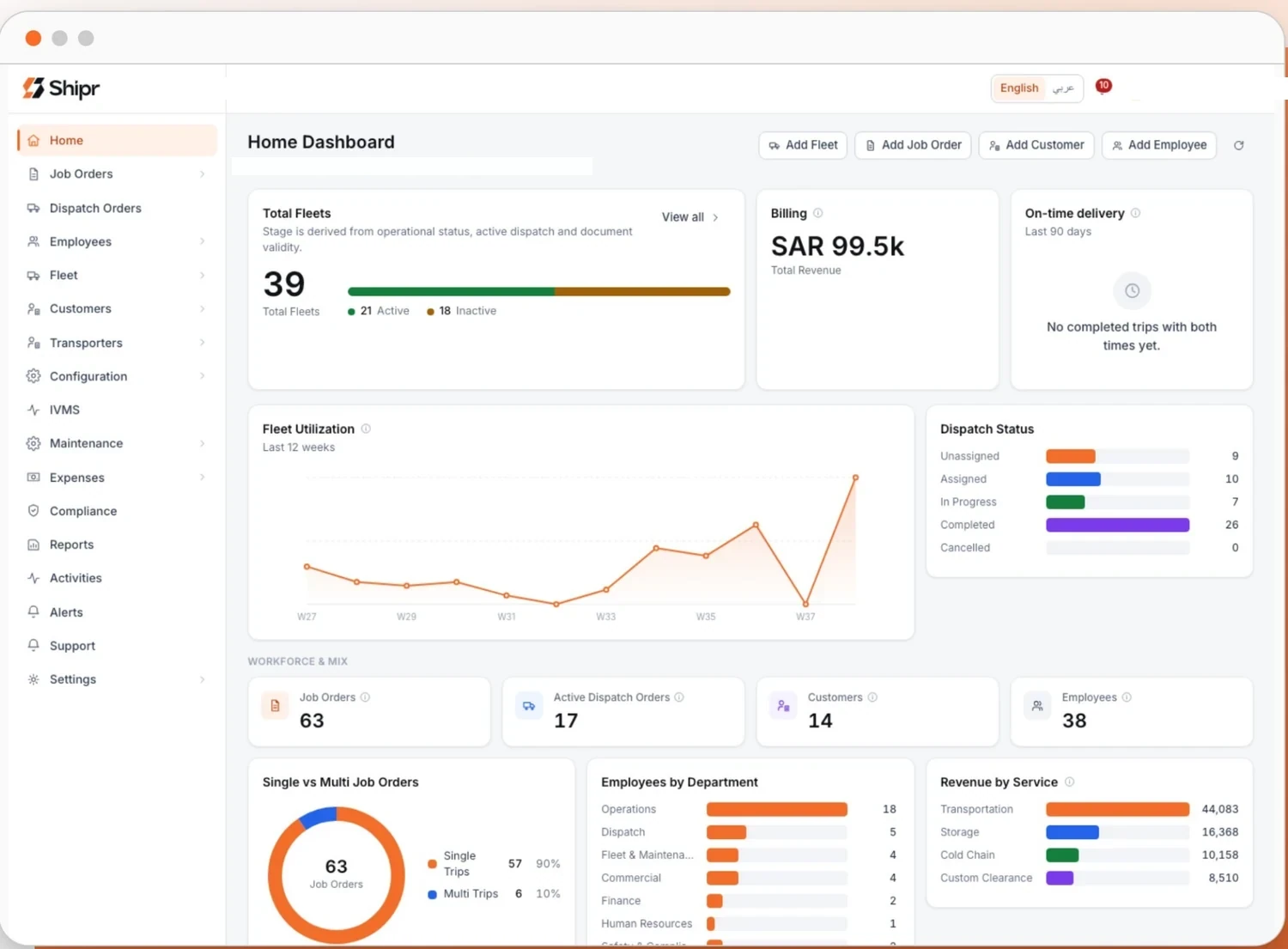
One record
Ask where a load is and why it is late, and the answer is on the screen rather than three phone calls away.
Software as a service
Your own workspace at your own address, opened with the Kingdom's ports, crossings and compliance rules already in it. Nothing to configure before you can dispatch.
In production use
Running in production with a Saudi road freight operator. Everything described on this site is checked against the live product rather than a specification.
Every load planned, executed and settled on one record
The vision is simple to state. What happened on the road and what appears on the invoice are the same account. Shipr.me connects the shipment, the people who move it, the partners who supply capacity, the operations that run it, the data it produces and the decisions that follow.
Dispatch in a few clicks. Prove it with evidence captured where the work happened. Bill from that evidence, in the period the work was done.
- Shipments
- People
- Partners
- Operations
- Data
- Decisions
- Technology
One operational record
Every stage writes to the same record
The waybill, the assigned driver, the vehicle telemetry and the proof of delivery all belong to one shipment rather than four systems.
Shipment
01A booking becomes a job order: customer, contract rate, route, cargo and delivery date.
Connectivity
02The driver app and the connected vehicle report from the road through the IoT platform.
Data
03Trip events, checklists, damage, proof of delivery and positions land on the same record.
Visibility
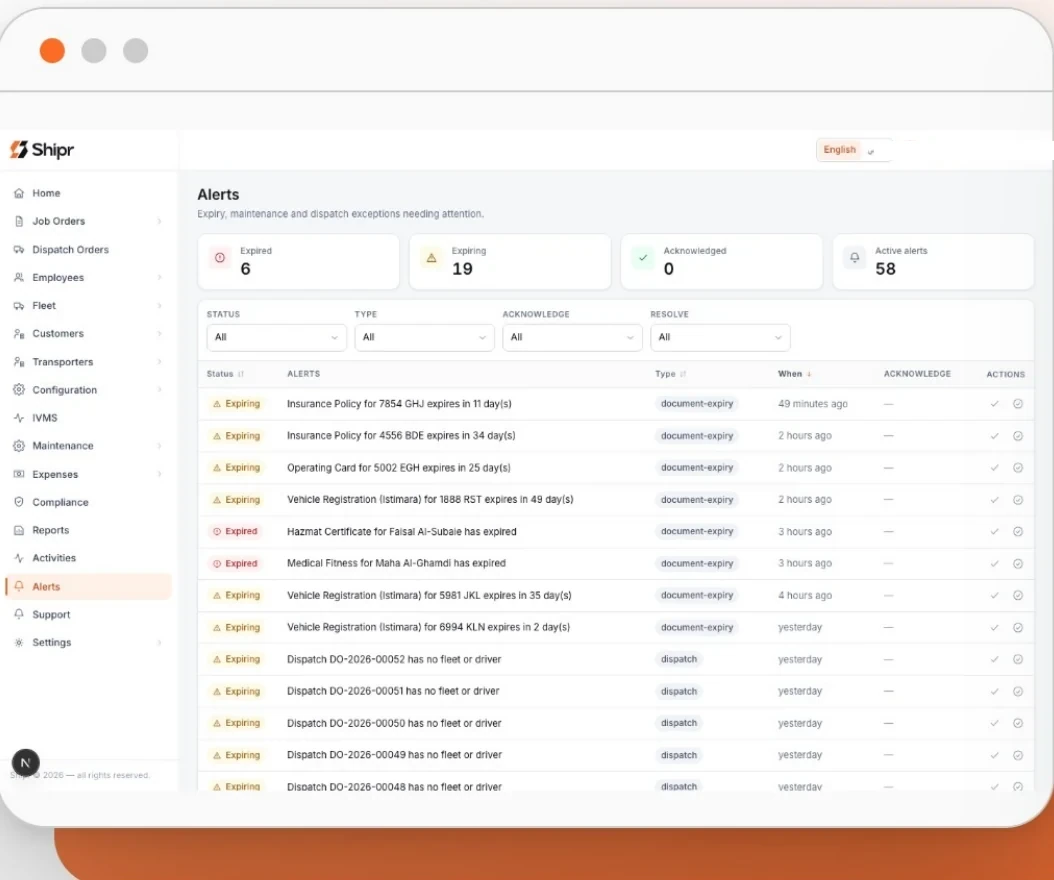
04Dashboard, four dispatch views, alerts and a report suite show what is moving and what is late.
Intelligence
05The attribution ledger assigns every span of delay to carrier, customer or regulator.
Decision
06Assignment refuses unfit vehicles and drivers. Charge suggestions arrive with their evidence.
Outcome
07A defensible bilingual invoice, raised in the period the work was done.
Eight product areas, one platform
Eight areas, one workspace, one record between them. Telematics arrives through Tracking.me, the IoT platform that connects the fleet.
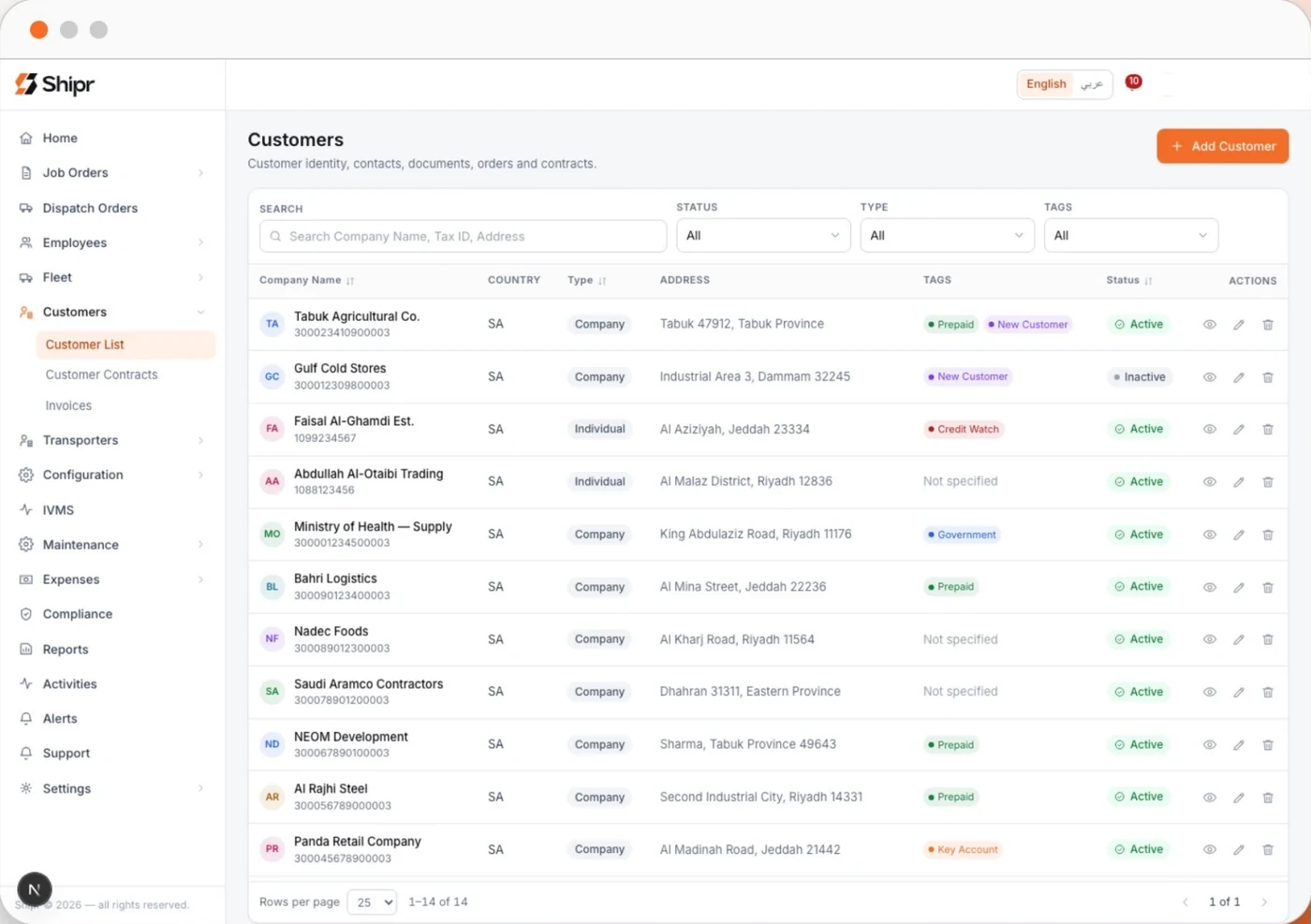
- 01Customers and invoicingWho is billed, on what terms, against which contract.
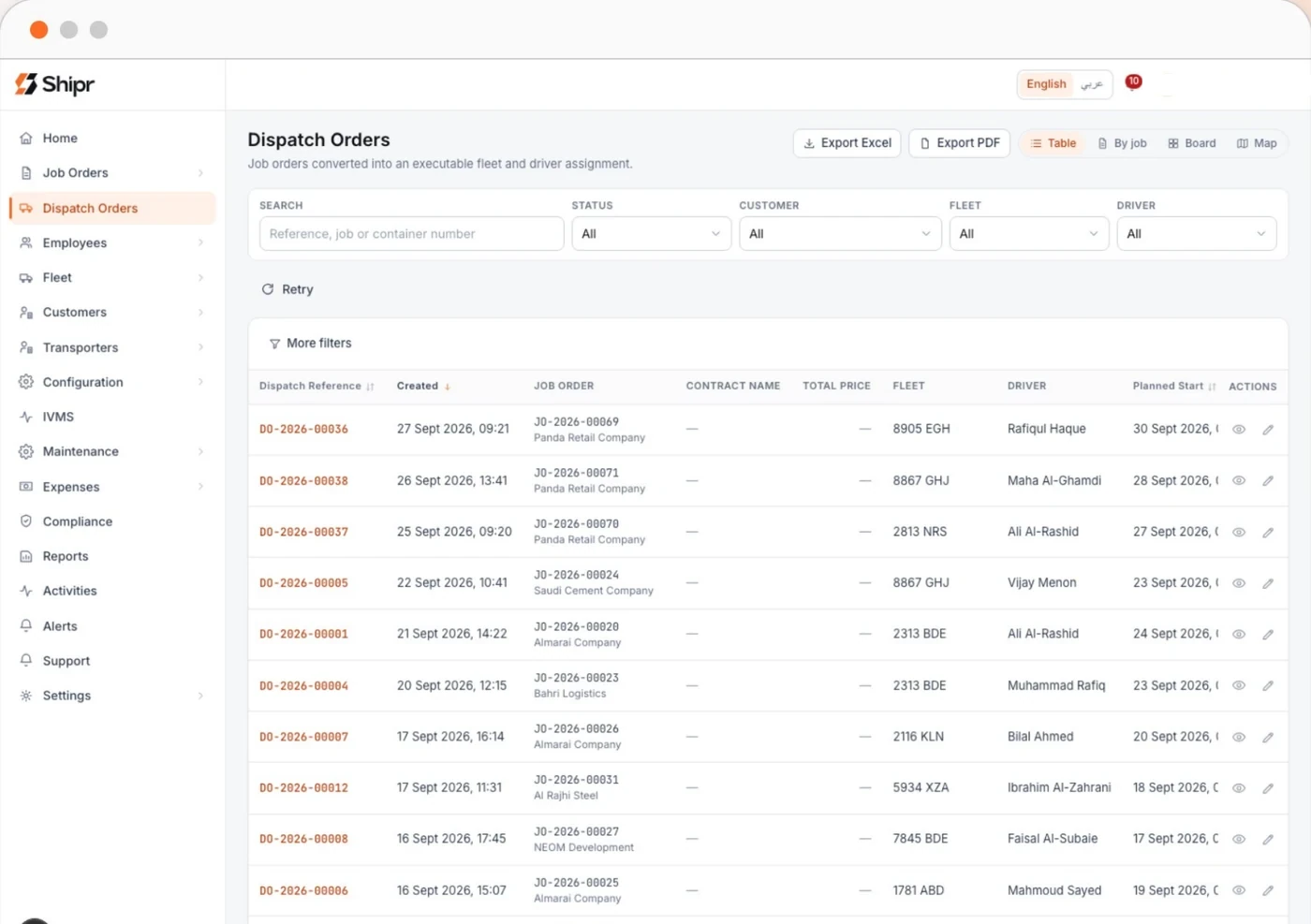
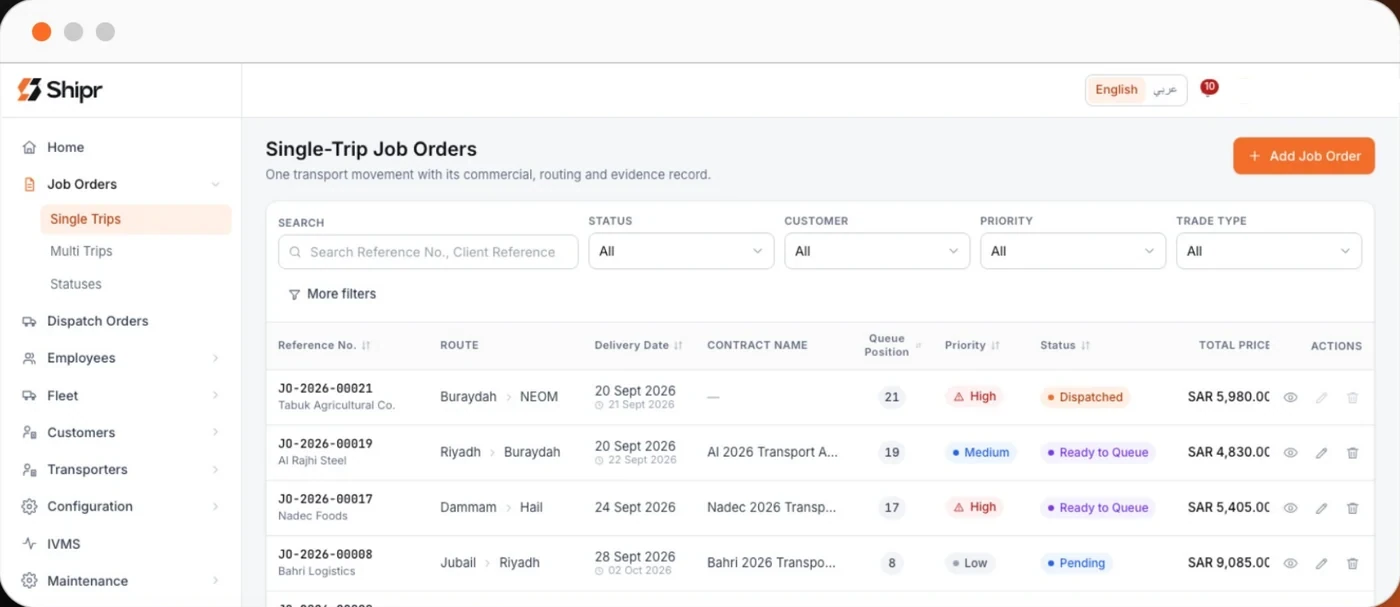
- 02Job orders and dispatchThe commercial state of a movement, made executable.
- 03Driver evidence and proofEvidence captured where the work happens, travelling with the order.
- 04Delay attribution and chargesEvery hour of a late delivery has an owner.
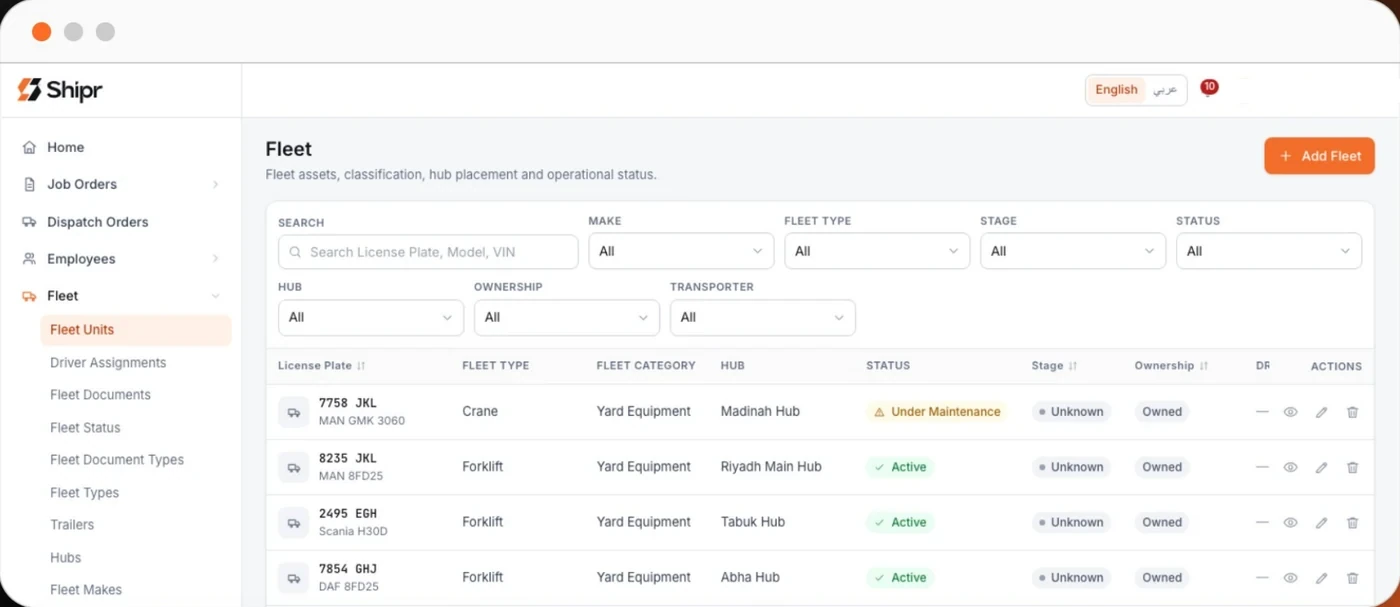
- 05Fleet, people and documentsOperational stage is derived, never typed.
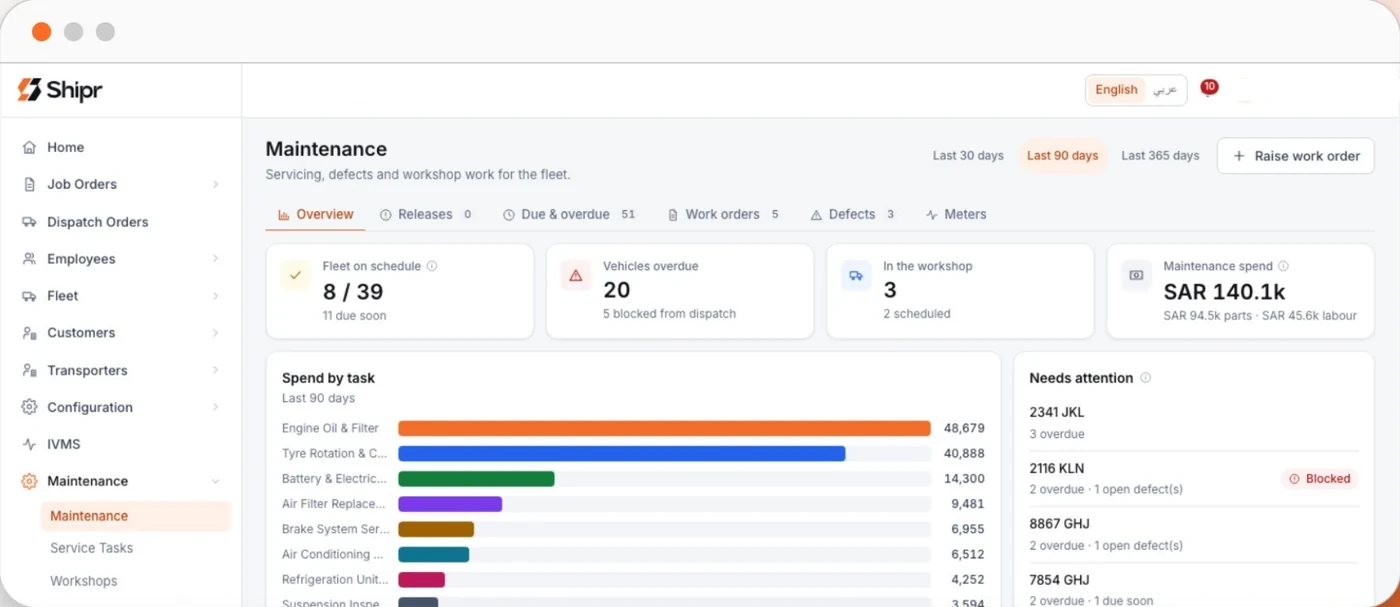
- 06Maintenance and expensesA release gate that keeps a failed vehicle off the board.
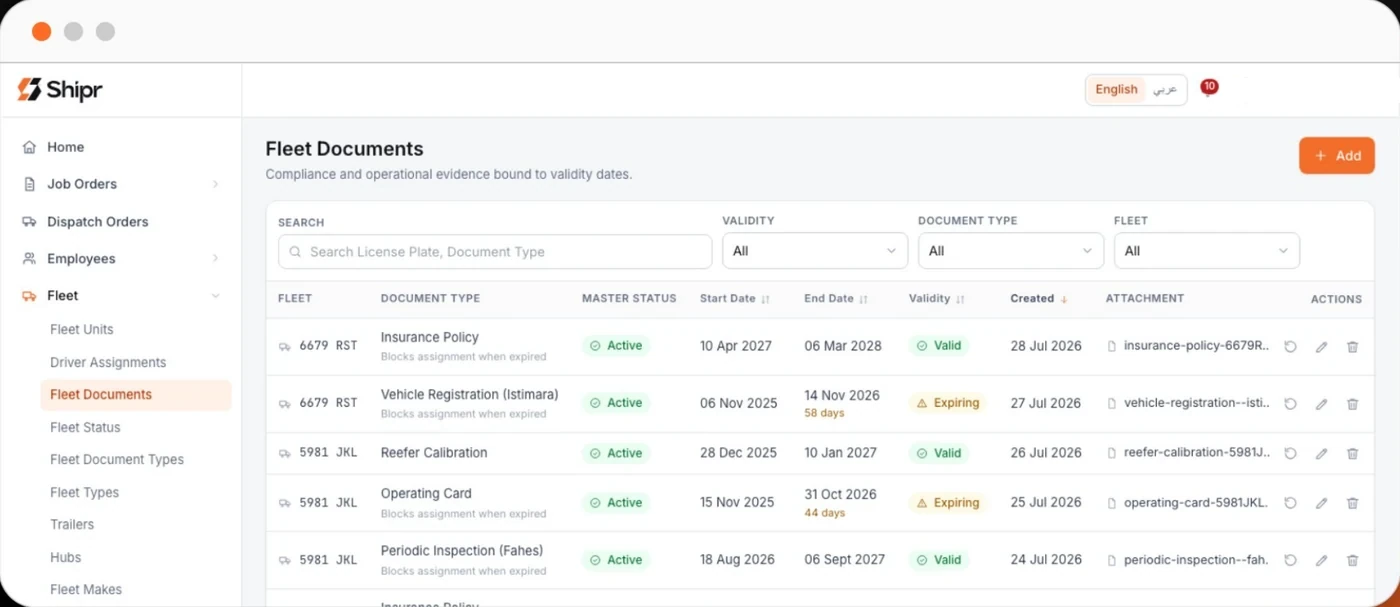
- 07Compliance and restrictionsSaudi obligations as modelled objects, not custom fields.
- 08Reports, alerts and audit26 parameterised reports, system-raised alerts, an append only audit trail.
IVMS telematics
Live tracking through the IoT platform.
Customers and invoicing
Every hour of a late delivery has an owner
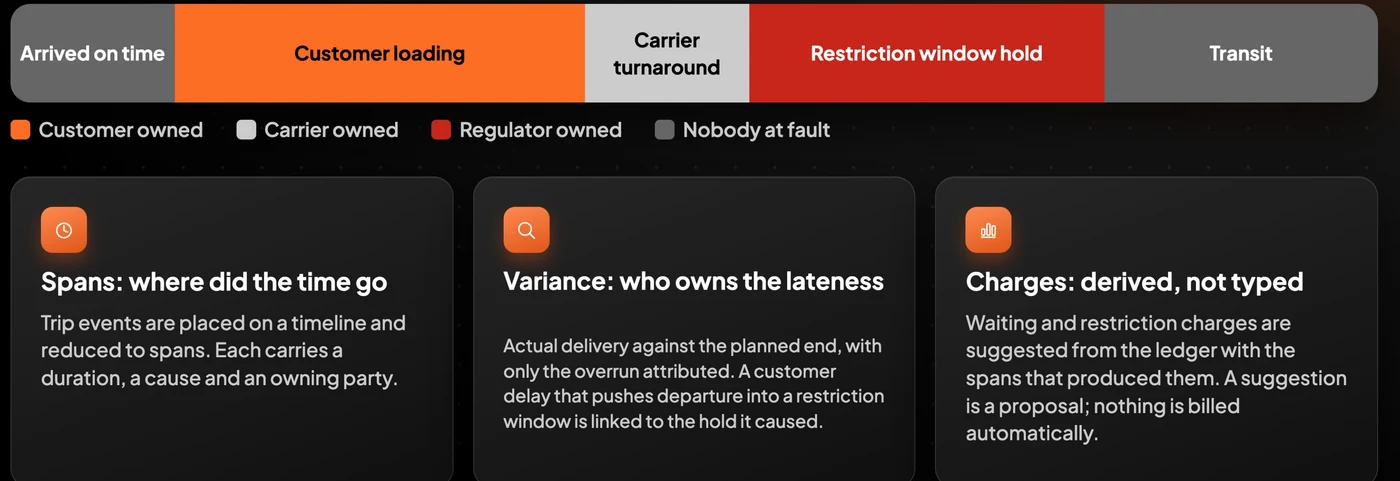
Stop absorbing waiting you did not cause, and stop billing customers for delays that were yours. Every span of a late delivery is measured, caused and owned.
Spans: where did the time go
Trip events are placed on a timeline and reduced to spans. Each carries a duration, a cause and an owning party.
Variance: who owns the lateness
Actual delivery against the planned end, with only the overrun attributed. A customer delay that pushes departure into a restriction window is linked to the hold it caused.
Charges: derived, not typed
Waiting and restriction charges are suggested from the ledger with the spans that produced them. A suggestion is a proposal; nothing is billed automatically.
Built for the Kingdom, not localised into it
- WASL
- TGA operating card
- Istimara
- Motor insurance
- MVPI inspection
- ZATCA
- GOSI
- Nitaqat
- Bayan
- Hazmat
- Civil Defence
- Medical fitness
Every workspace opens with 31 seeded requirements; one marked blocking stops dispatch until it is met.
- Bilingual by construction
- English and Arabic are both first class. The interface direction follows the language, and the tax invoice is bilingual on one page.
- Saudi regulation modelled
- Restriction windows, WASL and TGA enrolment, the operating card, MVPI, Bayan waybills and ZATCA invoicing are objects, not free text.
- The Kingdom's infrastructure, seeded
- Jeddah Islamic Port, King Abdulaziz Port, Jubail, Yanbu, Riyadh Dry Port and the land crossings ship in every workspace.
- A Sunday to Thursday week
- Attendance is recorded against a working week policy that is right for the Kingdom, not borrowed from elsewhere.
What the platform changes for an operator
One source of truth
01Every movement carries customer, route, price and status on one job order.
Less manual dispatching
02Order to assigned dispatch in a few clicks, with eligibility checked for you.
Utilisation you can see
03Fleet in assignable stage and trips per driver, from the registers and reports.
Lateness explained
04Late deliveries carry a complete attribution ledger.
Waiting time recovered
05Billable waiting suggested from evidence rather than typed from memory.
Faster, cleaner billing
06Unbilled work is visible; each movement can be invoiced once.
Non compliant dispatch prevented
07Expired documents and unmet requirements are refused at assignment.
Cost per vehicle controlled
08Fuel economy, running cost and maintenance spend per unit.
A defensible operating picture
09Dashboard and reports for management, with money shown only to those permitted.
Shipr.me is the logistics experience. IoT Cube is the technology foundation powering it.
The logistics experience
The console, the driver app and the operator console. Customers, job orders, dispatch, evidence, compliance, maintenance, expenses and invoicing, in English and Arabic.
Vehicle telemetry reports against the same vehicle, job order and shipment records
The technology foundation
IoT Cube proposes and delivers the transportation management platform, and connects the fleet through its IoT platform, Tracking.me powered by IoT Cube. Device binding, live unit view, violations and driver scorecards flow into Shipr.me from there.
Telematics in Shipr.me depends on a connected IoT platform account. With no provider connected, the module is reachable and empty.